
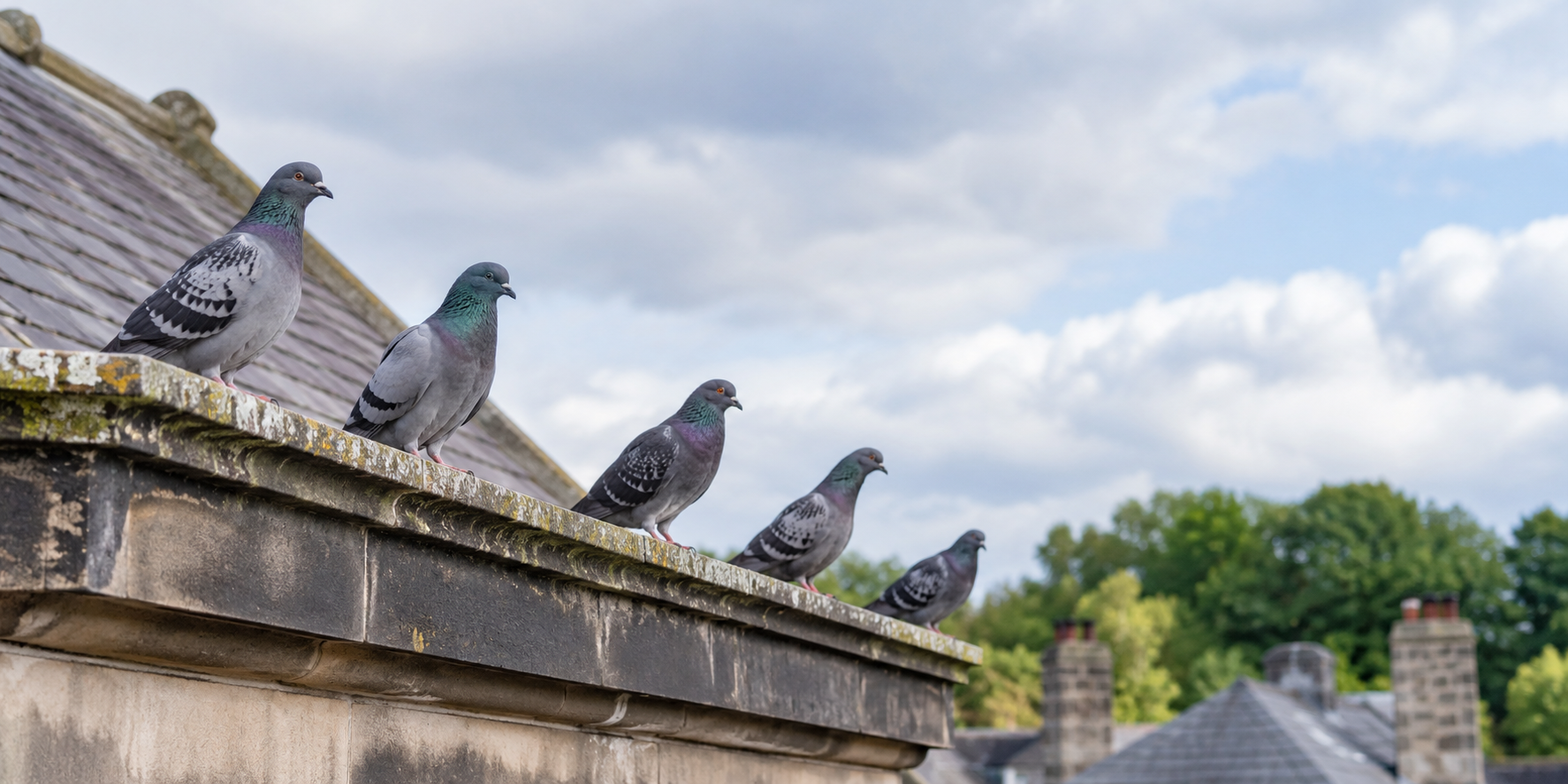
Feral pigeons and some other urban birds can roost or nest on roofs, ledges, plant areas and loading bays. Their droppings, nesting material and associated insects can create hygiene, safety and maintenance problems. Bird work must be carefully assessed because wild birds, their nests and eggs are protected by law, subject to limited licensing exceptions.
About the pest
- Pigeons return repeatedly to secure feeding and roosting sites.
- Nesting material can block gutters and drainage channels.
- Old nests can support mites, fleas, beetles and flies.
Common signs
- Regular roosting on ledges, roofs or equipment
- Accumulations of droppings and feathers
- Nesting material in gutters, vents or roof voids
- Noise, fouling or insect activity near a nest area
Why action matters
- Slip hazards and damage to building finishes
- Contamination around entrances, stock or food areas
- Blocked gutters and increased maintenance costs
- Secondary insect problems linked to nests
How Titan can help
- Survey the species, numbers, access points, feeding areas and nesting status
- Check legal and welfare requirements before any work begins
- Recommend appropriate netting, mesh, spikes, wire or habitat changes
- Plan safe cleaning and disinfection where fouling is present
Prevention advice
- Do not provide food or accessible waste
- Repair roof defects and screen openings where lawful
- Keep gutters clear and bins secure
- Arrange early assessment before established nesting becomes extensive
Need help?
Request a professional inspection
Tell us what you have seen and we will help arrange the right next step.