
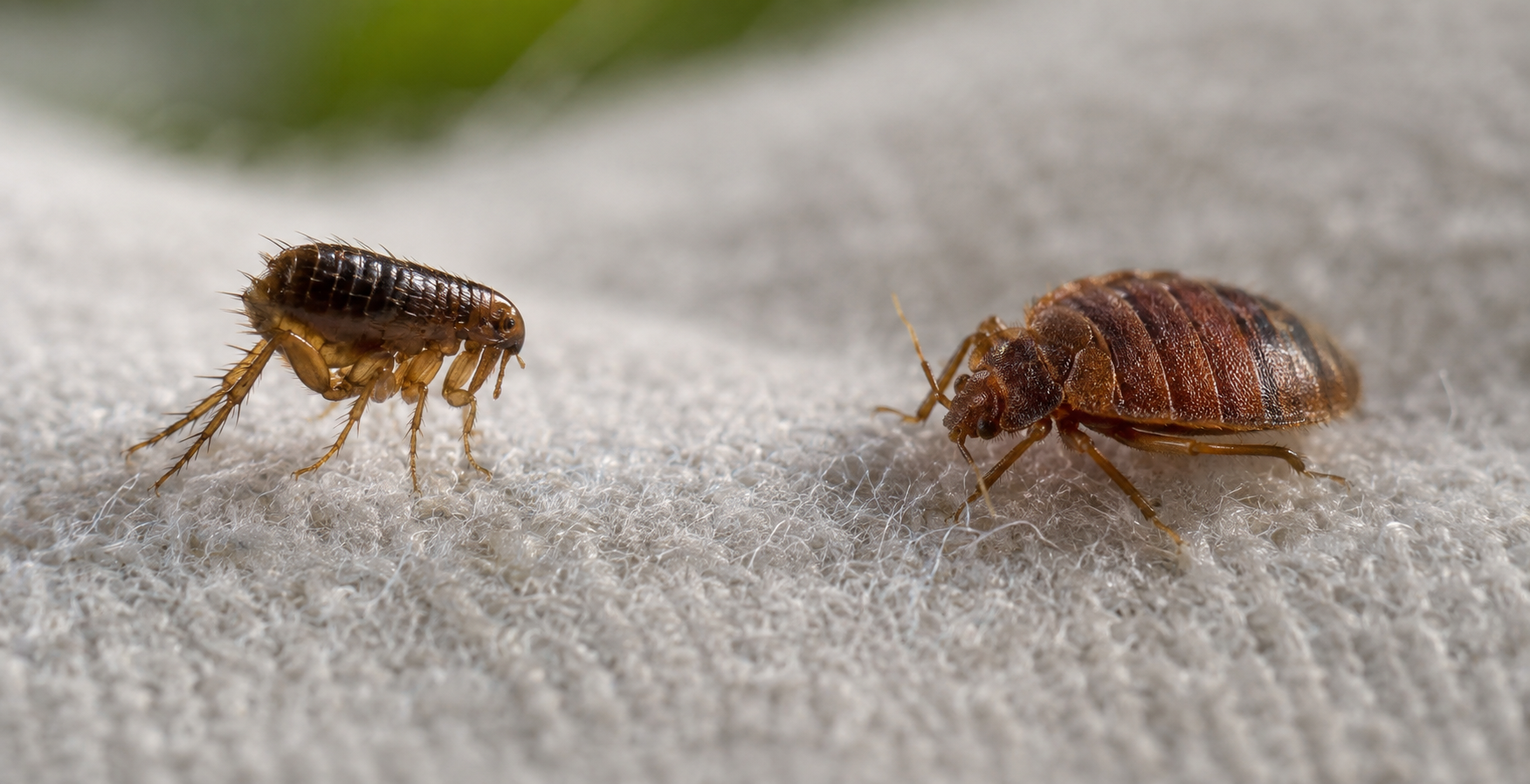
Fleas and bed bugs are different pests and need different treatment plans. Fleas are commonly associated with pets or wildlife and develop through eggs, larvae and pupae before becoming biting adults. Bed bugs hide close to resting areas and travel in luggage, furniture and personal belongings; their presence is not a sign of poor hygiene.
About the pest
- Flea pupae can remain protected until movement, warmth or carbon dioxide triggers emergence.
- Bed bugs hide in narrow cracks, mattress seams, bed frames and nearby furniture.
- Neither pest can usually be controlled by treating only the insects that are visible.
Common signs
- Unexplained bites, often noticed after resting
- Flea activity around pet bedding, rugs or floor edges
- Dark spotting, cast skins or live bed bugs near a bed
- Pets scratching more than usual
Why action matters
- Persistent bites, irritation and loss of sleep
- Spread to adjoining rooms or transported belongings
- Repeated activity if preparation or follow-up is incomplete
- Secondary skin infection caused by scratching
How Titan can help
- Identify the pest and map the affected rooms
- Give clear preparation instructions before treatment
- Use a targeted programme suited to the property, furnishings and infestation level
- Schedule follow-up checks because eggs or protected life stages may survive the first visit
Prevention advice
- Treat pets through a vet-approved programme when fleas are involved
- Wash and dry suitable bedding at an appropriate high temperature
- Check second-hand furniture before bringing it indoors
- Reduce clutter around sleeping areas and report new signs early
Need help?
Request a professional inspection
Tell us what you have seen and we will help arrange the right next step.