
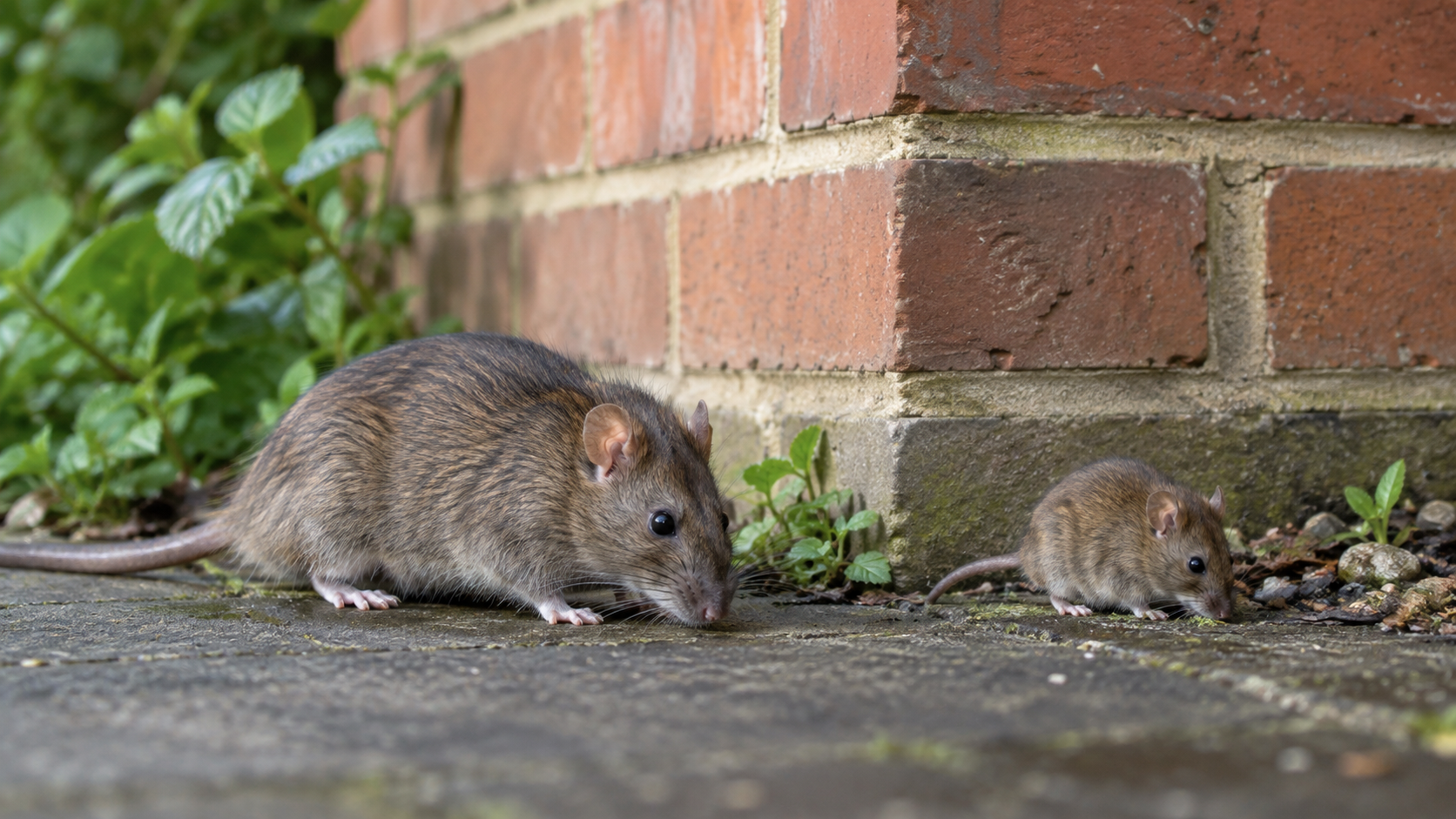
Rats and mice are highly adaptable and can enter buildings through surprisingly small gaps. They are usually attracted by food, water, warmth and shelter. A lasting solution means identifying the species, finding how it is getting in and dealing with the conditions supporting it—not simply treating the visible activity.
About the pest
- House mice can squeeze through gaps of roughly 6 mm.
- Rats commonly travel along walls, fences, drains and established runs.
- Both species are mainly active after dark and may remain hidden during the day.
Common signs
- Droppings, gnaw marks or shredded nesting material
- Scratching sounds in walls, ceilings or lofts
- Greasy rub marks along regular routes
- Burrows, footprints or disturbed food packaging
Why action matters
- Contamination of food and preparation surfaces
- Damage to wiring, pipework, insulation and stored goods
- Spread of bacteria and other disease organisms
- Rapid breeding if activity is left untreated
How Titan can help
- Inspect internal and external areas to identify activity, harbourage and entry points
- Select suitable traps, monitoring devices or controlled rodenticide treatment for the site
- Place equipment securely and revisit as required to assess progress
- Remove accessible treatment materials at the end and provide proofing recommendations
Prevention advice
- Seal structural gaps and damaged air bricks
- Keep food and animal feed in sealed containers
- Repair leaking pipes and remove standing water
- Keep vegetation cut back and bins closed and clean
Need help?
Request a professional inspection
Tell us what you have seen and we will help arrange the right next step.