
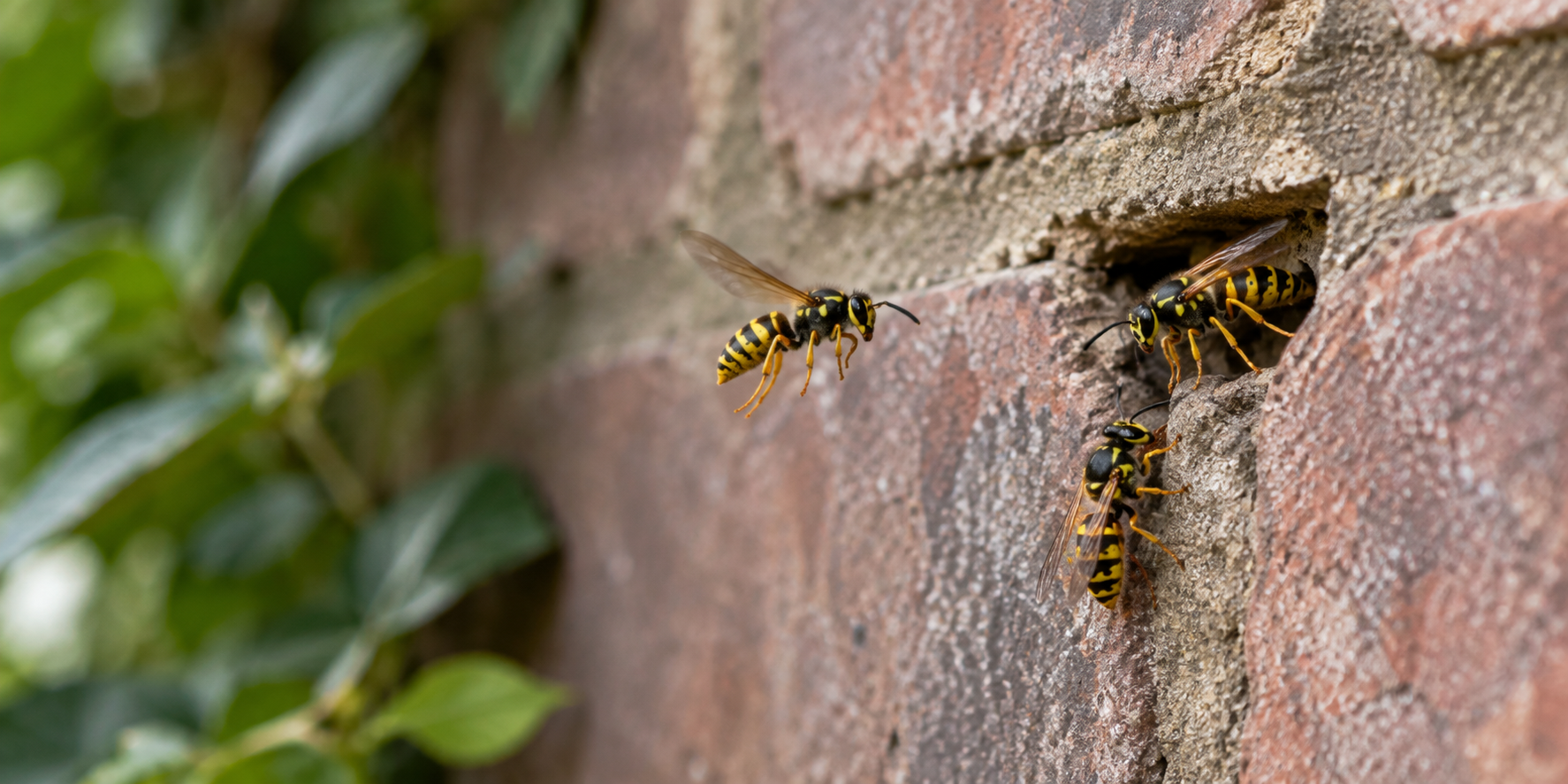
Wasps are beneficial predators outdoors but can become a risk when a nest is close to doors, windows, play areas or busy workplaces. Colonies grow through spring and summer, with activity often becoming most noticeable later in the season. The nest entrance and surrounding access must be assessed before treatment.
About the pest
- A steady flight path to one opening usually indicates an active nest.
- Nests may be in lofts, wall cavities, sheds, trees or underground.
- Wasps can become defensive when the nest is disturbed.
Common signs
- Repeated wasp traffic to one hole or roof edge
- A visible papery nest
- Wasps appearing inside from a loft or wall void
- Increased numbers around food, bins or sweet drinks
Why action matters
- Painful stings and possible allergic reactions
- Multiple stings if a nest is disturbed
- Risk to children, customers, staff and pets
- Unsafe access when nests are at height or inside cavities
How Titan can help
- Confirm whether the insect is a wasp, bee or another species
- Locate the active entrance and assess nearby people, pets and access
- Apply a targeted professional treatment where required
- Explain the exclusion period and when activity should reduce
Prevention advice
- Seal old entry gaps only after activity has fully stopped
- Keep food waste and bins covered
- Fit insect screens where appropriate
- Avoid blocking an active entrance before treatment
Need help?
Request a professional inspection
Tell us what you have seen and we will help arrange the right next step.