
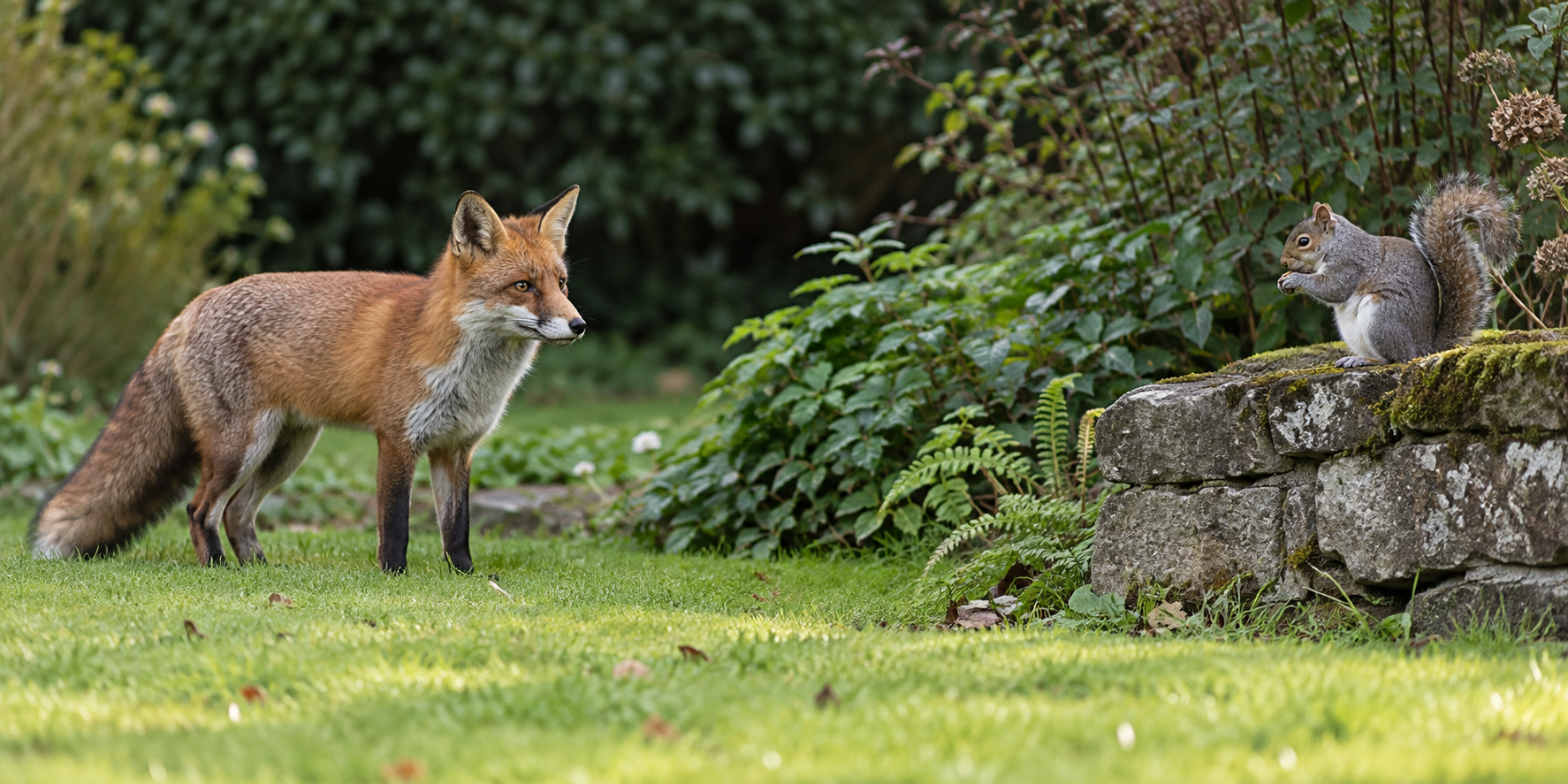
Foxes, grey squirrels and other wildlife can cause noise, fouling, damage or concerns when they live too close to buildings. Management must be species-specific, humane and lawful. The first step is to confirm the animal, understand what is attracting it and check whether dependent young or protected species may be present.
About the pest
- Urban foxes exploit accessible food, shelter and quiet garden spaces.
- Grey squirrels may enter roof voids and can damage insulation, timber and wiring.
- Wildlife activity often changes with breeding seasons and food availability.
Common signs
- Tracks, droppings, digging or disturbed waste
- Daytime or night-time noise in roofs and gardens
- Gnawing, damaged vents or entry holes at roof level
- Regular runs beneath fences, sheds or outbuildings
Why action matters
- Damage to roofs, cables, insulation, gardens and stored items
- Fouling and secondary insect activity
- Welfare risks if access is blocked while young are inside
- Breach of wildlife legislation if the wrong action is taken
How Titan can help
- Identify the species and inspect access, shelter and food sources
- Check legal protections, seasonal restrictions and animal welfare needs
- Recommend exclusion, habitat change or lawful control where appropriate
- Monitor after work to confirm the problem has been resolved
Prevention advice
- Secure bins, pet food and fallen fruit
- Repair roof gaps using suitable wildlife-proof materials
- Remove easy access to lofts, sheds and under-deck areas
- Seek advice before disturbing an occupied nest or den
Need help?
Request a professional inspection
Tell us what you have seen and we will help arrange the right next step.